



Who Should Read This?
- Businesses wanting to understand how AI is changing online search
- Marketing teams looking to improve their visibility on Google and AI platforms
- B2B companies relying on their website to attract new customers and enquiries
- Businesses wondering whether their current SEO strategy is still enough
Why It’s Worth Reading
- B2B buyers are increasingly using AI tools to research and compare suppliers
- Appearing on Google doesn’t necessarily mean your business will appear in AI-generated answers
- SEO remains important, but GEO is becoming another consideration for digital visibility
- Understanding how both work can help your business attract more of the right customers
What You’ll Learn
- What SEO and GEO mean and how they differ
- How B2B buyers are using AI to find agencies and suppliers
- Why AI search matters for your business
- Practical ways to improve your website’s visibility in traditional and AI-powered search
The Way Businesses Search Is Changing
Think about the last time you needed to find a new supplier, agency or business service. You probably opened Google, typed in what you were looking for and browsed through a few websites.
But what if, instead of searching through multiple results, you could simply ask AI to recommend the best options for your business?
That’s increasingly becoming part of how people research suppliers.
Tools such as ChatGPT, Google AI Overviews, Gemini and Perplexity allow users to ask detailed questions, compare businesses and receive summarised answers. You can learn more about how AI tools are changing search behaviour in our previous blog here.
AI can help bring together information from different sources and present relevant options in a single response.
And this isn’t just a trend among consumers.
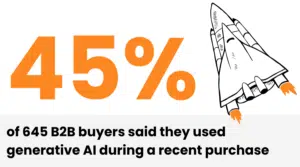
Research published in May 2026 showed that 45% of B2B buyers surveyed had used generative AI during a recent purchase, primarily to gather information about vendors and products.
That creates an important question for businesses.
If potential customers are using AI to research suppliers, is your business showing up in those conversations?
What Is SEO and Why Does It Still Matter?
SEO stands for Search Engine Optimisation or, as we like to call it, making Google happy.
It’s the process of improving your website so search engines such as Google can understand your content and display it when people search for relevant products or services.
Good SEO can involve:
- Using relevant keywords throughout your website
- Creating useful, informative content
- Improving website speed and usability
- Making sure your website works well on mobile devices
- Building trustworthy links to your website
- Organising pages so search engines can easily understand them
For example, if your business provides commercial cleaning services in London, you would want your website to appear when somebody searches for “commercial cleaning company London”.
The better your website answers that search, the greater its opportunity to attract relevant visitors.
SEO is still a valuable part of digital marketing. However, the way people interact with search results is changing.
A 2025 study found that users clicked on traditional search results in 8% of visits where a Google AI summary appeared, compared with 15% when no AI summary was shown.
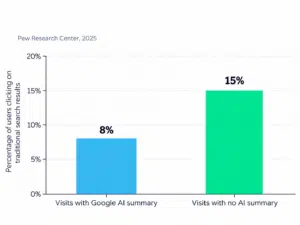
This doesn’t mean SEO is becoming irrelevant. It means businesses also need to think about how their information appears within AI-generated answers, not just traditional search listings.
What Is GEO and How Is It Different?
GEO stands for Generative Engine Optimisation.
Put simply, GEO is about making your business and website content easier for AI-powered search tools to discover, understand and potentially reference in their answers.
While SEO focuses on helping your website appear in search engine results, GEO focuses on improving your visibility within AI-generated responses. The two approaches have plenty in common, but there is an important difference.
With traditional SEO, somebody might search for “best website design agency for B2B businesses” and receive a list of websites to explore.
With AI search, they might ask:
“Can you recommend a UK website design agency experienced in B2B websites, lead generation and eCommerce?”
Instead of presenting only a list of links, AI may generate a response comparing several agencies and explaining why they might be suitable. If your business isn’t clearly described online, supported by useful content or recognised through trustworthy sources, AI systems may have less relevant information to draw upon.
The aim of GEO is to make sure your expertise, services and experience are communicated clearly enough to be understood.
How Are B2B Buyers Using AI to Find Suppliers?
AI isn’t necessarily replacing the entire buying journey.
Businesses still compare prices, review previous work, ask for recommendations and speak directly to potential suppliers. What AI is doing is making parts of that research process quicker.
For example, a business looking for a new eCommerce development partner could use AI to:
- Identify agencies experienced with specific eCommerce platforms
- Compare services offered by different suppliers
- Understand technical terminology before contacting an agency
- Research common project costs and considerations
- Create a shortlist of potential partners
This matters because buyers are often forming opinions long before making an enquiry. Being visible during those early stages of research can therefore be just as important as having a strong sales process.
How Can You Make Your Website More Visible in AI Search?
The good news is that improving your GEO doesn’t necessarily mean starting your digital marketing strategy from scratch. Many of the things that make a website useful for people and traditional search engines can also support AI visibility.
Below are some practical areas worth focusing on.
💡 If you want to learn more about getting your business noticed by AI, join our upcoming webinar, Getting Recommended by AI: A Practical Introduction to GEO. We’ll break down how AI search works, why GEO matters and the practical steps you can take to improve your business’s visibility in AI-generated answers. Sign up for free here.
1. Make It Clear What Your Business Actually Does
This might sound obvious, but many websites spend a lot of time describing how innovative, passionate or experienced they are without clearly explaining what they offer.
AI tools need useful information to understand whether your business is relevant to a particular question.
Your website should clearly explain:
- What products or services you provide
- Which industries or customers you work with
- Where your business operates
- What problems you help customers solve
- What experience makes you a suitable supplier
For example, “We provide specialist B2B website development for manufacturing and engineering businesses” communicates much more useful information than “We create exceptional digital experiences”.
Clear information helps potential customers understand your business too.
2. Create Content That Answers Real Customer Questions
Think about the questions your customers regularly ask before working with you.
How much does a new website cost? What’s the difference between Magento and Shopify? How long does a website redesign take? What should businesses look for in a digital agency?
These are exactly the kinds of questions people may ask Google or AI search tools.
Creating useful blog posts, FAQs and service pages that answer these questions gives your website opportunities to become a relevant source of information.
Focus on answering the question properly rather than repeating keywords as many times as possible.
3. Show Evidence of Your Experience
Anybody can claim to be an expert, showing evidence of your work makes that claim much more convincing.
Case studies, client testimonials, project examples and detailed service information help demonstrate what your business has actually achieved.
For B2B companies, this is particularly important because purchasing decisions often involve significant budgets and multiple stakeholders.
If an AI tool is comparing suppliers, detailed information about your experience may help it identify where your business is relevant.
For example: a case study explaining how you improved an eCommerce website’s performance gives far more context than simply saying you build eCommerce websites.
4. Keep Your Website and Business Information Consistent
Your own website isn’t the only place potential customers can learn about your business.
Company profiles, industry directories, reviews, professional platforms and other websites can all contribute to your online presence. Make sure information about your services, expertise, contact details and business location is accurate and consistent.
It is also worth reviewing outdated website content.
If you’ve introduced new services, changed the industries you work with or completed relevant projects, make sure that information is reflected online.
AI search results are not guaranteed to use every source, but providing accurate and consistent information gives your business a stronger digital foundation.
5. Don’t Forget Your Existing SEO
One of the biggest misconceptions about GEO is that businesses need to abandon traditional SEO.
They don’t.
In fact, Google’s own guidance confirms that existing SEO best practices remain relevant for appearing in AI Overviews and AI Mode. Having a technically sound website, useful content, relevant internal links and clearly organised pages still matters.
Rather than thinking about SEO and GEO as competing strategies, it makes more sense to consider how they work together:
- SEO helps your website become discoverable in search engines.
- GEO builds on that foundation by making your information clear, credible and useful for AI-powered search experiences.
Neither approach guarantees a particular ranking or AI recommendation, but both can improve how effectively your business communicates online.
Put simply, it’s no longer just about making your website visible on Google. It’s about making sure your business can also be found, understood and recognised by AI-powered platforms such as ChatGPT, Gemini and Claude.
💡 If you’d like to learn more about SEO and GEO can work together in the era of AI, take a look at our in-depth guide here.
How Do You Know if Your Business Is Appearing in AI Search?
Measuring AI visibility isn’t quite as straightforward as checking where your website ranks on Google. However, there are some useful places to start.
Try asking AI search tools the kinds of questions your customers might ask.
For example:
“Which UK suppliers specialise in commercial packaging for food businesses?”
“Who are the best digital agencies for B2B lead generation?”
“Which companies provide bespoke booking systems for UK businesses?”
Look at which businesses appear, whether your company is mentioned and what sources are referenced.
You can also:
- Check whether AI tools describe your services accurately
- Review which competitors appear for relevant questions
- Monitor referral traffic from AI platforms where available
- Ask new enquiries how they discovered your business
- Track whether your website is generating more relevant leads over time
Remember that AI responses can vary depending on the tool, wording and context, so one search is not a reliable measure of your overall visibility.
Final Thoughts
AI is changing the way people find information, research businesses and compare potential suppliers, but that doesn’t mean everything we know about digital marketing needs to change overnight.
The difference is that businesses now need to consider two connected opportunities: being found through traditional search engines and being recognised as a relevant source within AI-powered search.
For B2B companies, where customers often spend considerable time researching before making contact, both can play an important role.
If you’re looking to improve your existing SEO, develop more effective website content or understand how AI is changing online visibility, we’re here to help.
If you’d like to make sure your business is easier to find online, get in touch with the CDA team today.
