



Who Should Read This?
- Small businesses looking to generate more B2B leads and attract new customers
- Business owners and marketing teams wanting to improve their lead generation strategy
- B2B companies relying on their website to generate enquiries and new business opportunities
- Businesses looking for practical, cost-effective ways to improve their online visibility and attract the right customers
Why It’s Worth Reading
- Generating more leads doesn’t necessarily mean spending more on marketing
- B2B buyers are increasingly researching and comparing suppliers online before making contact
- SEO, AI search and useful website content can help your business get found by potential customers
- A well-planned lead generation strategy can help you attract better-quality enquiries and make more of your marketing budget
What You’ll Learn
- What B2B lead generation is and why it matters for small businesses
- Five practical strategies to attract more relevant B2B leads
- How SEO, GEO and content marketing can support your lead generation efforts
- How to turn website visitors into enquiries and measure what’s actually working
How Can Small Businesses Generate More B2B Leads?
Generating consistent, high-quality leads is one of the biggest challenges for small businesses. You might offer a fantastic product or service, but if the right people aren’t finding your business, you’re missing valuable opportunities.
And with more businesses researching suppliers online, the way you attract potential customers is becoming increasingly important.
So, what are the most effective B2B lead generation strategies for small businesses?
The answer isn’t necessarily spending more money on advertising or contacting hundreds of potential customers. It’s about making your business easier to find, demonstrating your expertise and giving people a reason to get in touch.
From improving your website and search visibility to building trust through content and professional relationships, here are five practical ways to generate more B2B leads.
1. Turn Your Website Into a B2B Lead Generation Tool
Your website is often the first impression potential customers have of your business. But having a professional-looking website doesn’t automatically mean it will generate enquiries.
An effective website should help visitors quickly understand what your business does, who you work with and why they should choose you over a competitor.
Think about the last time you visited a supplier’s website. If you couldn’t immediately understand what they offered or how to contact them, would you have stayed?
Probably not.
For small businesses looking to generate more B2B leads, it’s worth reviewing a few key areas:
- Clear messaging: Explain exactly what you offer, which businesses you help and what problems you solve.
- Relevant service pages: Give each core service its own page, with useful information that answers common customer questions.
- Strong calls to action: Make it easy for visitors to request a quote, arrange a conversation or submit an enquiry.
- Trust signals: Include customer reviews, accreditations, case studies and examples of your work.
- Simple user experience: Ensure your website loads quickly, works well on mobile devices and is easy to navigate.
For example, rather than simply having a page titled “Our Services”, an engineering consultancy could create dedicated pages explaining its design, testing and compliance services.
This helps potential customers find the information they’re looking for, while also creating opportunities for those pages to appear in relevant search results.
The goal is simple: make it as easy as possible for the right visitors to become potential customers.
2. Improve Your Visibility With SEO and AI Search (GEO)
What’s one of the first things businesses do when they need a new supplier?
They search online.
Whether somebody is looking for “commercial cleaning services in Birmingham” or “IT support for small businesses”, appearing in relevant search results can put your business in front of potential customers at exactly the right time.
This is where Search Engine Optimisation (SEO) comes in.
SEO helps traditional search engines like Google understand your website and display it to people searching for relevant services. For small businesses, this means focusing on the keywords and questions that your ideal customers are actually searching for.
But there’s another important consideration.
AI-powered search is changing how B2B buyers discover and compare suppliers.
As we’ve explored in our previous blog on SEO vs GEO, the way B2B buyers discover and compare suppliers is changing, making it increasingly important for businesses to consider both traditional and AI-powered search.
Tools such as ChatGPT, Google AI Overviews, Gemini and Perplexity are giving businesses new ways to research suppliers, compare options and find answers without necessarily visiting multiple websites. This is where Generative Engine Optimisation (GEO) becomes relevant.
GEO focuses on making your content easier for AI-powered search tools to discover, understand and potentially reference in their responses. The good news is that many of the same improvements can support both SEO and GEO.
For example, you can:
- Create dedicated pages targeting relevant services and industries
- Answer common customer questions clearly throughout your website
- Publish genuinely useful content that demonstrates your expertise
- Keep your business information accurate and consistent across online platforms
- Include case studies and real examples that demonstrate your experience
Rather than simply trying to appear for broad searches like “business services”, think about the specific problems your customers are trying to solve. A more targeted approach can help attract visitors who are much closer to making an enquiry.
3. Create Helpful Content That Attracts Potential Customers
Not every business looking at your website is ready to make an enquiry straight away.
Some may be researching potential solutions. Others might be comparing suppliers, looking at costs or trying to understand what’s involved in a particular service.
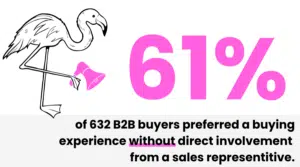
Research published by Gartner in 2025 found that 61% of B2B buyers surveyed preferred an overall buying experience without direct involvement from a sales representative.
This highlights how important it is for businesses to provide useful information before a potential customer gets in touch.
Content marketing can help you do exactly that.
By creating informative blogs, guides, FAQs and case studies, you can answer the questions your customers are already asking and position your business as a knowledgeable, trustworthy supplier.
For example, a commercial heating company could publish articles covering:
- How much does a commercial boiler installation cost?
- How often should businesses service their heating systems?
- What should you look for in a commercial heating contractor?
These topics are directly relevant to the company’s services and could attract businesses actively researching their options. They also create opportunities for your website to appear in traditional search results and become a useful source for AI-powered search.
The key is to focus on quality rather than quantity.
One genuinely helpful article answering a specific customer question can be more valuable than several generic posts that don’t offer anything new.
💡 Remember, your content doesn’t always need to be complicated. Often, the most valuable insights come from the questions your team answers every day.
4. Build Trust and Generate Leads Through Social Media
Social media isn’t just for consumer brands. It can also be a valuable tool for B2B businesses looking to increase their visibility, demonstrate their expertise and connect with potential customers.
But effective B2B social media marketing isn’t necessarily about posting every day or being active on every platform. It’s about understanding where your target audience spends their time and sharing content that gives them a reason to engage with your business.
LinkedIn is particularly valuable for B2B businesses, providing opportunities to connect with decision-makers, share industry insights and build professional relationships.
However, other platforms shouldn’t be overlooked.
Facebook can help businesses connect with local communities and industry groups, while Instagram offers opportunities to showcase projects, introduce your team and give potential customers a behind-the-scenes look at your business. YouTube can also be useful for sharing product demonstrations, tutorials and practical advice.
The right platforms will depend on your industry, your audience and the type of content you can create. And whichever platforms you choose, building trust should be a priority.
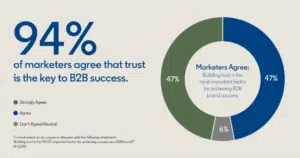
Image Credit: linkedin.com
LinkedIn’s 2025 B2B Marketing Benchmark research found that 94% of B2B marketers surveyed agreed that trust is key to success in B2B marketing.
One way to build that trust is by sharing content that demonstrates your experience and the results you’ve achieved for customers.
For example, you could:
- Share customer success stories: Show how you’ve helped other businesses overcome challenges or achieve better results.
- Highlight recent projects: Give potential customers a clearer understanding of your capabilities and the type of work you deliver.
- Offer useful advice: Answer common customer questions and share industry knowledge that demonstrates your expertise.
- Show the people behind your business: Introduce your team, share company updates and help potential customers get to know who they’d be working with.
- Encourage conversations: Respond to comments, engage with relevant businesses and build relationships rather than focusing entirely on sales messages.
Social media can also help potential customers discover your business before they’re actively looking for a supplier. Someone might come across a useful LinkedIn post, see an example of your work on Instagram or watch a YouTube video answering a question they’ve been researching.
Even if they don’t make an enquiry immediately, those interactions can help build familiarity with your brand.
The key is to focus on being useful, visible and credible rather than simply promoting your services. Because when a potential customer does need what you offer, being a business they already recognise and trust can make all the difference.
5. Focus on Lead Quality, Follow-Ups and Measuring Results
Generating leads is important, but not every enquiry will turn into a customer.
That’s why an effective B2B lead generation strategy needs to consider what happens after somebody gets in touch. For small businesses, this starts with understanding what a good lead actually looks like.
Are you trying to reach businesses in a particular industry? Do your ideal customers typically have a certain budget, business size or service requirement?
Being clear about your target audience makes it easier to focus your marketing on attracting relevant enquiries.
It’s also important to have a simple process for managing and following up with potential customers.
For example:
- Respond promptly: Make sure enquiries are acknowledged and followed up while interest is still high.
- Ask the right questions: Understand what the business needs, its timescales and whether your services are a good fit.
- Stay in touch: Not every potential customer is ready to buy immediately, so useful follow-up information can help maintain the relationship.
- Track your enquiries: Understand whether your leads are coming from Google, AI search referrals, social media, paid advertising or other sources.
- Review what converts: Look beyond website traffic and focus on which channels generate genuine enquiries and new customers.
You don’t necessarily need expensive software to get started. Even a simple tracking system can help you identify patterns and understand which activities are delivering results.
It’s also worth remembering that different marketing channels often work together.
Someone might discover your business through Google, read a blog post, visit your social media pages and return to your website weeks later to make an enquiry. Looking at the bigger picture can help you make better decisions about where to spend your marketing budget.
For small businesses, generating ten relevant enquiries is often far more valuable than attracting hundreds of visitors who are unlikely to become customers.
What Is the Best B2B Lead Generation Strategy for a Small Business?
There’s no single approach that works for every business, and the most effective strategy will depend on your industry, audience and goals.
However, a successful B2B lead generation strategy usually combines several key elements:
- A well-designed website that turns visitors into enquiries
- Strong SEO and GEO foundations that help potential customers discover your business
- Helpful, relevant content that answers customer questions
- Trust-building activity through LinkedIn, testimonials and case studies
- Consistent follow-ups and clear measurement of results
The important thing is making sure these activities work together.
Your website should support your content. Your content should improve your visibility. And your online presence should give potential customers the confidence to take the next step.
You don’t need to do everything at once, either.
Start by understanding where your best customers currently come from, identify what’s missing and focus on the improvements most likely to make a difference.
Need Help Generating More B2B Leads?
At CDA, we understand that effective B2B lead generation is about more than simply increasing website traffic. It’s about attracting the right businesses, building trust and turning online interest into meaningful enquiries.
From website design and development to SEO, GEO and digital marketing, we help businesses create a stronger online presence that supports their wider growth objectives.
Whether you’re looking to improve your search visibility, get more from your existing website or develop a more effective B2B lead generation strategy, we can help.
Ready to generate more high-quality B2B leads?
Get in touch with the CDA team today to discuss how we can help you attract the right customers and turn more opportunities into business.
