



Who Should Read This?
- Small and medium-sized UK businesses looking to attract more local customers
- Business owners running Facebook and Instagram ads but struggling to generate enquiries
- Marketing teams wanting to improve their advertising performance and make better use of their budgets
- Local businesses considering Meta advertising as part of their digital marketing strategy
Why It’s Worth Reading
- Reaching more people doesn’t always mean reaching the right customers
- Poorly targeted advertising can waste valuable marketing budgets
- Meta Ads can help local businesses connect with potential customers in the areas they serve
- Understanding how your campaigns perform can help you generate more relevant enquiries and improve results
What You’ll Learn
- What Meta Ads are and how they can benefit local businesses
- Why reaching the right audience matters more than generating clicks
- How location targeting, campaign objectives and engaging content work together
- Five practical ways to improve your Meta advertising campaigns
- How to measure whether your ads are delivering real business value
Are Your Ads Getting Attention but Not Enquiries?
You’ve created an advert, chosen your budget and launched a campaign on Facebook or Instagram. The clicks are coming in, your advert is reaching people, and everything seems to be going well.
But there’s one problem.
Where are all the customers?
It’s a frustrating situation for any business, particularly when you’re spending money trying to win new business.
Meta Ads, which allow businesses to advertise across platforms including Facebook and Instagram, can be a valuable way to increase awareness, generate enquiries and reach people who might be interested in your products or services.
And there’s certainly no shortage of people using these platforms.
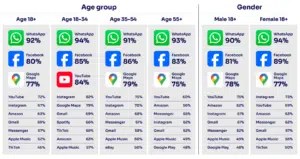
Image Credit: Ofcom.com
According to Ofcom’s Online Nation 2025 report, WhatsApp and Facebook are among the UK’s most widely used smartphone apps, reaching 92% and 80% of adult smartphone users respectively.
Facebook is particularly popular among those aged 35–54, reaching 86% of users in this age group, while Instagram reaches 82% of 18–34-year-olds.
These figures highlight the potential for businesses to connect with different audiences across Meta’s platforms.
But here’s the thing.
Your business doesn’t need to reach everyone. It needs to reach the people most likely to become customers. For a local business, that could mean homeowners looking for a tradesperson, people searching for nearby services or customers considering their next purchase.
The challenge is making sure your advertising budget is being spent on people who are actually relevant to your business.
So, how do you know if your Meta Ads are reaching the right audience, and what can you do to improve them?
What Are Meta Ads and How Do They Work?
Meta Ads are paid advertisements that businesses can run across Meta’s platforms, including Facebook and Instagram.
Unlike a traditional social media post, which is generally shown to people who already follow your business and others reached through the platform, paid advertising accelerates this visibility and gives you more control over who you’re trying to reach and what you want them to do.
Through Meta Ads Manager, businesses can create campaigns based on different goals, such as:
- Increasing awareness of their business
- Encouraging people to visit their website
- Generating enquiries or quote requests
- Starting conversations through messages
- Promoting products and increasing sales
Meta uses information about users, their activity and its advertising systems to determine which adverts to show to different people. Businesses can also choose audience settings, including geographical locations, to help focus campaigns on relevant customers.
For example, a landscaping company based in Leeds could create an advert promoting garden design services to people in its local service area. Rather than relying solely on customers discovering the business through Google, the advert could introduce its services to people browsing Facebook or Instagram.
This makes Meta Ads particularly useful for businesses offering services that customers might be interested in before they actively begin searching for them. However, the success of a campaign depends on more than simply choosing a location and pressing publish.
Why Does Audience Targeting Matter for Local Businesses?
Imagine you’re running a cleaning company that serves Leeds and the surrounding areas. You launch a Facebook advertising campaign promoting your services, and it generates hundreds of clicks.
Sounds promising, doesn’t it?
But what if many of those clicks come from people outside your service area? Or from people who are simply curious about your advert but have no intention of booking a cleaner?
You might be getting plenty of attention, but very little business.
This is why audience targeting matters.
For local businesses, advertising should focus on reaching people who are realistically able and likely to use their services. That doesn’t necessarily mean targeting the smallest possible audience. In fact, making an audience too restrictive can limit opportunities for Meta to find relevant people.
Instead, it’s about finding the right balance between reaching enough potential customers and keeping your campaigns relevant to your business.
Your advert’s wording, imagery, offer and chosen campaign objective all contribute to the type of customer you attract.
How Can Local Businesses Improve Their Meta Ads?
The good news is that improving your Meta advertising doesn’t always mean increasing your budget or starting your campaigns again. Often, reviewing a few key areas can help you identify where your advertising could be working harder.
Here are five practical things worth focusing on.
1. Know Who Your Ideal Customer Actually Is
Before deciding where your adverts should appear, think about who you’re trying to attract.
What does your ideal customer need? What problems are they trying to solve? And what would encourage them to choose your business?
For example, a local kitchen installation company might want to reach homeowners who are considering a renovation. But rather than creating a generic advert promoting kitchen installations, it could focus on a specific customer need, such as creating more storage or modernising an outdated kitchen.
This makes the message more relevant to the people most likely to be interested.
Start by considering:
- Who your existing customers are
- Which products or services generate the most valuable enquiries
- Where your customers are based
- What problems encourage people to contact your business
- What makes your business different from local competitors
You don’t need to know every detail about your audience.
But having a clearer understanding of who you’re trying to reach can help you create advertising that speaks to their needs rather than attempting to appeal to everyone.
2. Make Your Location and Service Area Clear
Location targeting is particularly important for businesses that operate within a specific town, city or region. Meta Ads Manager allows businesses to select geographical areas for their campaigns, helping them focus their advertising on relevant locations.
However, selecting a location doesn’t guarantee that everyone seeing your advert lives there permanently. Meta’s targeting can include people recently present in an area, depending on the available settings.
That’s why it’s worth making your service area clear within the advert itself.
For example, compare these two headlines:
“Professional Landscaping Services: Get a Free Quote”
“Professional Landscaping Services Across Leeds and West Yorkshire: Get a Free Quote”
Both promote the same service, but the second gives potential customers more useful information straight away.
You can also:
- Review the locations selected within your campaign
- Avoid targeting areas your business cannot realistically serve
- Mention your town, city or service area naturally in your advert
- Check whether enquiries are coming from relevant locations
- Adjust your approach if you’re repeatedly attracting enquiries from outside your service area
For businesses serving multiple locations, separate adverts or campaigns may also be useful when different areas require different messages or offers.
The aim is to make it easy for potential customers to recognise whether your business is relevant to them.
3. Choose the Right Advertising Objective
One of the most important decisions you’ll make when creating a Meta Ads campaign is choosing what you want it to achieve.
Meta offers different campaign objectives, including awareness, traffic, engagement, leads and sales. These objectives help its advertising system understand which actions to optimise for.
For example, if your main goal is generating enquiries, a campaign focused on website traffic may not be the most suitable starting point. You could end up attracting visitors who are happy to click on your advert but aren’t particularly likely to get in touch.
A lead-generation campaign, on the other hand, is designed to encourage actions such as form submissions, messages or calls.
Meta also offers Instant Forms, which allow people to submit an enquiry directly through Facebook or Instagram without visiting an external website. These can make it easier for potential customers to contact your business, although it’s still important to consider whether the enquiries are relevant.
The important thing is choosing a campaign objective that reflects what your business is actually trying to achieve.
4. Create Adverts That Speak to Your Audience
Even with the right audience settings, your advert still needs to give people a reason to pay attention. For local businesses, being genuine and relatable can be particularly valuable.
People often want to feel confident that they’re dealing with a reliable business that understands their needs. Using real photographs, clear messaging and examples of your work can help communicate this.
Consider a local roofing company.
An advert saying “Professional Roofing Services Available” explains what the business offers, but it doesn’t give customers much reason to take action.
Compare that with:
“Leaking Roof? Our Local Roofing Team Can Help. Get in Touch for a Free Quote Across Leeds and West Yorkshire.”
The second message addresses a specific problem, explains the service and makes the next step clear.
When creating your adverts, consider:
- Using genuine images of your business, team or completed projects
- Highlighting the problems your services solve
- Including relevant customer reviews or testimonials
- Keeping your messaging straightforward and easy to understand
- Using clear calls to action such as “Request a Quote” or “Book a Consultation”
It’s also worth testing different headlines, images and messages to understand what resonates with your audience.
A highly polished advert isn’t always the most effective one. Sometimes, a genuine photograph and a clear explanation of how your business can help are all you need to start a conversation.
5. Don’t Forget What Happens After Someone Clicks
Getting someone to click on your advert is a positive first step.
But what happens next?
If your advert promotes a specific service, but visitors arrive on a website where they struggle to find information about it, they may leave without making an enquiry.
This is why your advertising and website need to work together.
The page people arrive on should reflect the message that encouraged them to click in the first place.
For example, if a local home improvement company advertises free bathroom renovation consultations, directing potential customers to a dedicated page explaining that service could be more useful than sending them to a general homepage.
But an effective lead generation strategy doesn’t stop at attracting visitors. As we previously explored in our guide to optimising the full lead journey, everything from your landing page to your enquiry forms and follow-up process plays a role in turning initial interest into genuine business opportunities.
That might involve:
- Making your contact information easy to find
- Keeping enquiry forms short and straightforward
- Ensuring your website works properly on mobile devices
- Clearly explaining the next step after someone gets in touch
- Following up with enquiries promptly
💡 Remember, effective lead generation doesn’t stop once someone clicks on an advert. Your entire customer journey, from first impression to initial enquiry, plays a role in turning interest into business opportunities.
How Do You Know If Your Meta Ads Are Actually Working?
It’s easy to focus on the numbers Meta provides, particularly when an advert receives plenty of views, likes or clicks. But those figures don’t always tell you whether your advertising is helping your business grow.
One of the most useful measurements for a lead-generation campaign is cost per lead, which tells you how much you’re spending on each enquiry.
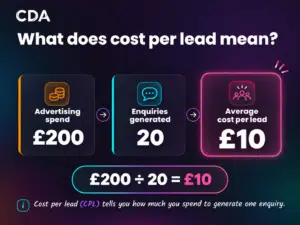
For example, if you spend £200 on advertising and generate 20 enquiries, your average cost per lead is £10.
But that figure only tells part of the story.
What if only two of those enquiries are from people genuinely interested in your services or feasible for you to work with? Suddenly, the campaign may not look quite as successful.
This is why it’s worth measuring the quality of enquiries alongside the number you receive.
You can also review:
- Enquiry volume: How many people contact your business through your campaigns
- Lead quality: Whether those enquiries are relevant to your services
- Conversion rate: The percentage of visitors who complete an action, such as submitting a form
- Cost per customer: How much you’re spending to acquire each paying customer
- Sales or bookings: How many enquiries turn into actual business
This is particularly important for local businesses, where one high-quality enquiry could be worth considerably more than dozens of irrelevant clicks.
It’s also worth reviewing your campaign performance regularly.
Meta’s advertising tools increasingly use AI-powered features to help identify people who may respond to your adverts. These tools can be helpful, but businesses should still review their audience controls and monitor the quality of results.
If you’re using website tracking or remarketing to measure and improve campaigns, remember that UK privacy rules also apply. The Information Commissioner’s Office explains that consent is required for cookies and similar technologies used for online advertising.
The goal is to make informed decisions about your advertising rather than relying on clicks alone.
Final Thoughts
Meta Ads can be a valuable way for local UK businesses to reach new customers, generate enquiries and increase awareness of their services. But successful advertising isn’t simply about reaching as many people as possible. It’s about understanding who your customers are, creating relevant messages and making it easy for people to take the next step.
For local businesses working with limited marketing budgets, getting these foundations right can help make advertising more effective and reduce unnecessary spending.
And the good news is that improving your Meta Ads doesn’t always require a bigger budget.
Sometimes, a more considered approach to audience targeting, campaign objectives and customer experience can make all the difference.
If you’re looking to launch your first Meta Ads campaign, improve your existing advertising or generate more high-quality enquiries, our team can help you make better use of your marketing budget.
If you’d like to make sure your Meta Ads are reaching the right people, get in touch with the CDA team today to find out how we can help your business attract and convert more customers.
